Since a very young age, I’ve always enjoyed singing along to the radio or enthusiastically joining in to the songs at Church. However, despite a short stint in the choir when I was little I never had much in the way of actual tuition. I know I can carry a tune, but have always longed to have a voice that is strong enough to sing on my own.
I remember when I was in my late 20’s vowing to take singing lessons, and to be good enough to sing in front of a crowd before 30. Well that didn’t happen and when writing my list it was one of the first things I decided to actually do – and see it through this time.
I looked into instructors, although there is such an array of them and prices vary a lot. I made a few enquiries but seemed to be getting passed from pillar to post. Most instructors seemed to be a bit expensive, and I didn’t really know how to assess quality or have any idea if they were right for me.
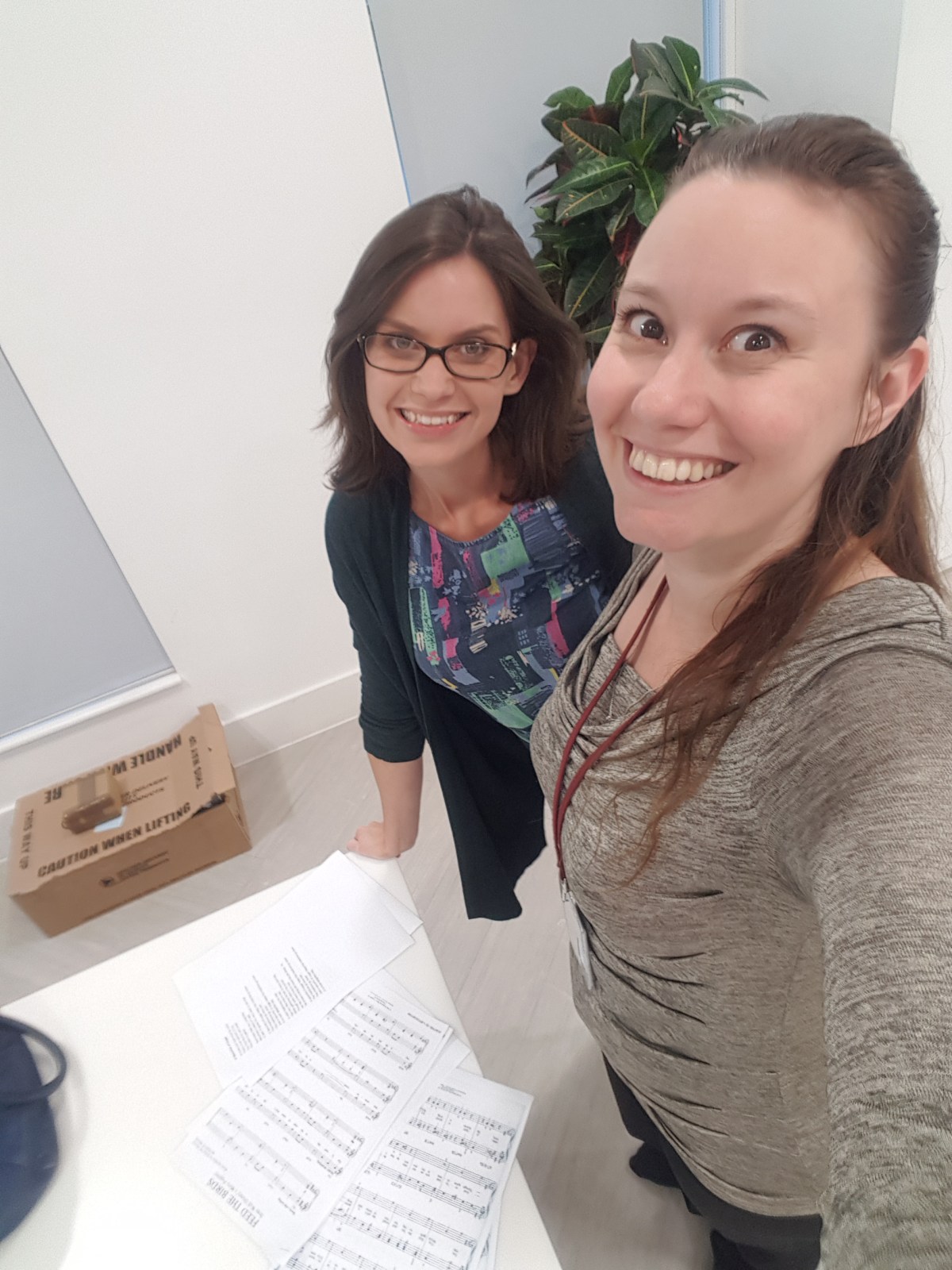
Luck was on my side as a friend of mine, a professional singer, happened to be working part time in my company. Our annual Charity auction saw all staff pledging time or skills to the highest bidder and so I won 4 hours of singing lessons from the amazing Kim Hawthorn.
Kim Hawthorn
We began with a chat about my goals. My musical taste is pretty eclectic, I enjoy anything from cheesy pop to opera to country, and everything in between – I’m even happy listening to “The Organist Entertains” on Radio 2 of an evening! I explained to Kim that I wanted to learn some basic technique and strengthen my delivery and tone. Kim’s an opera singer so naturally we gravitated towards more classical singing styles rather than modern pop!
So many styles
We began each 30-minute session with some stretches, and ensuring a good posture. It has a major effect on your voice, apparently! We then did some warm-ups, making loads of seemingly random and odd sounds, to get my voice and lungs working. The key is correct breathing technique so we did a lot of work in trying to make sure I could project without affecting the clarity of the notes I was trying to produce!
An example of technique
The next challenge was interesting. I can’t read music so I learn everything by ear. Looking at sheet music I kind of get the starting note and then go “up a bit, down a bit” and hope for the best! We worked on songs from musicals, which was great for me as I could go off and learn them, then work on the singing technique.
Up a bit, down a bit
I learned “On My Own” from Les Miserables, then “Colours of the Wind” from Pocahontas, then “Feed the Birds” and “Spoonful of Sugar” from my favourite, Mary Poppins.
One thing I found really tricky was the switch between what Kim called my “chest voice” – the one that feels natural, like talking or most pop songs – and my “head voice” – the high, opera-ish notes. Most songs have a high bit and the trick is to know how and when to switch from one tone to the other. Eventually, with lots of practice and a few frustrations, I managed to get the hang of it. It’s really opened up a whole range of notes for me that I previously could have sworn I couldn’t reach!
We worked on how to sing first the notes, then add in the sounds, then finally the words. I learned how to start a line with a vowel (trying to get a clean opening rather than a breathy start or a harsh glottal sound).
The last thing we worked on was quality of notes. I tend to slide up and down a bit from one note to the next rather than keeping each note pure. I still haven’t mastered this one, but at least I am now aware of it, so I can work on perfecting it!
Typical lesson
There were some times when I got frustrated, when I just wasn’t getting it. Kim was really encouraging and changed tactics when this happened. We started over-acting the songs and flitting round the room in some bizarre dance scenes to bring some fun and lightness back into it. Funnily enough, it was these times when I was least self-conscious and sometimes sang better as I wasn’t trying so hard!
I really enjoyed my singing lessons, and I do feel like I have improved. I’m probably not quite ready for a solo performance but I do feel a lot more confident in singing out loud!
It’s just like any other skill – practice and dedication can really make a lot of difference, along with a little helpful guidance from someone who knows what they are doing!
Over the last 20 years, I have learnt many styles and forms of dance, from Ballroom, Argentine Tango, Modern Jive, to dabbling in Salsa, West Coast Swing and even had a go at Belly Dancing.
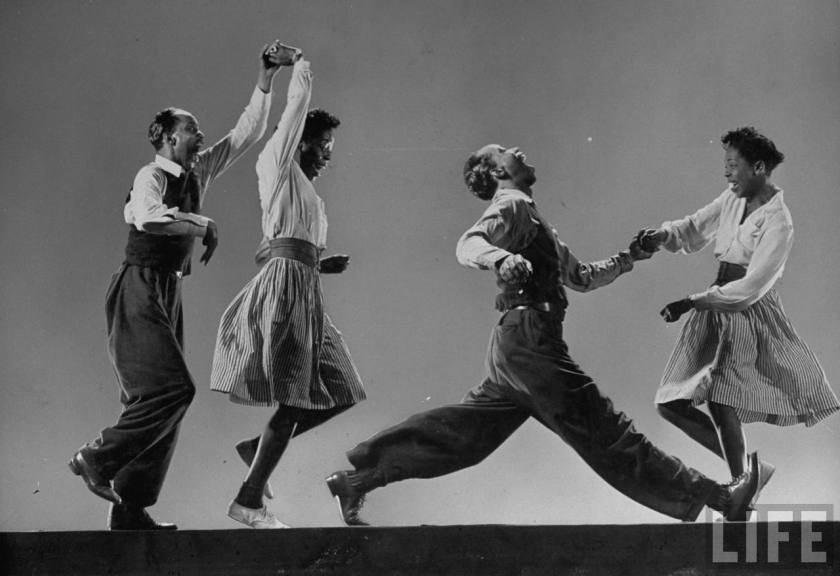
One form of dance I never got round to learning was Lindyhop. It originated in America as a form of jazz/swing dance. It looks like fun – bouncy, exuberant, playful – and I have had it in the back of my mind for a while to learn. Very occasionally at a dance event I see someone doing Lindy, and I thought it would be fun if I could join in, at least a little.
Looks like fun! (picture source: http://www.ridleymcintyre.com)
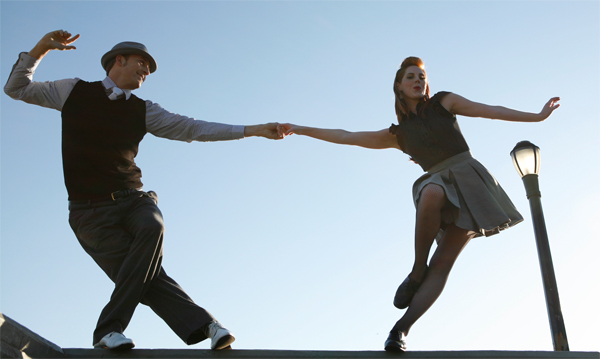
I love the music, and I love the “look” – kind of jazzy, think vintage 1920’s, 30’s and 40’s. Guys in braces, flat caps, high waisted wide-leg trousers and two-tone shoes; women in dresses that are fitted up top and flare out when you spin. Definitely my cup of tea!
A friend of mine recommended a local class that meets on a Monday in Guildford, however I was really looking for a quick, intensive course to get a basic understanding of the dance. A bit of research and I found a workshop (full or half day) run by Swingland in London.
The day dawned and I headed on over to Balham where the class was to be held. There was no-one there! After wandering into an empty bar, I discovered that the class had been cancelled. I contacted the organisers who were really apologetic, somehow my email was rejecting their messages so I didn’t get the emails about the fact it had been rescheduled.
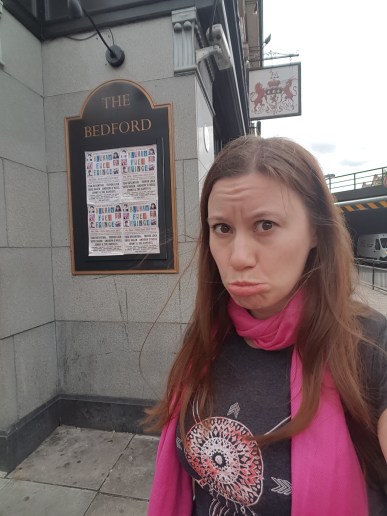
Sad face as I arrived to find a cancelled class 😦
Apology accepted, I booked myself onto the next available course. This time when I arrived the teachers and other attendees were all there, which was a good start! One thing I loved was that the instructors requested that you shouldn’t give tips or feedback to your partner but allow the teacher to do so. This meant that people could get stuck in without fear of criticism from their partner.
Lindyhop is a partner dance, closely related to Jive and Charleston. We partnered up and swapped around so everyone got a chance to dance with everyone else.
We began by learning the rhythm and footwork, I found this bit OK but I have a tendency to use my hips and close my feet – both pretty big no-no’s in Lindyhop. The posture is also unusual – almost leaning forward with your bum out – and I kept having to correct myself! We learnt various steps and soon had a little routine to dance through.
Martin and Romayne teaching
The class begins
The other people on the course were a mixed bag of abilities. Some beginners who had never danced before found it really difficult to get the hang of the rhythm, whereas others seemed pretty experienced and breezed through the morning session.
During the lunch break, I chatted to a few of the others. The general feeling was that everyone was finding the new dance style challenging, but a few people complimented me on my style and asked me if I had done it before! In the meantime I was thinking the same thing about them. It seems we truly are our own critics, something I’ve noticed before.
The second half of the day we learnt some more complex moves, including a beginner’s version of the classic “throw out”, and some charleston-style jumpy kicky stuff. Sadly it was a bit too challenging for some, who dropped out, but we were joined by some more people who were “improvers”, so the class was a little fuller (albeit mostly followers so we had several ladies standing out in between rotations).
Class in progress
Trying not to kick your partner in the shins
Kick, kick, turn, kick, jump, turn, kick.
I had a really great time and definitely enjoyed myself. I am pleased I’ve finally got a new dance under my belt, and I am sure with a little more work I could become fairly competent at it. My only (slight) criticism is that I would have liked more dancing to the music and less talking/walking through. But that might just be my impatient personality – I just wanted to get stuck in!
However for me, whilst watching advanced dancers is truly fantastic, I am afraid that with less experienced dancers it looks to me a little bit like someone’s had an underwear accident. I am sure it feels great but I do prefer dances where there is a little more elegance and grace.
It’s just my opinion though, so I would still thoroughly recommend that you give it a go. I can especially recommend Martin and Romayne from Swingland who were absolutely brilliant. The class was fun, well taught, and the right balance between challenging and achievable.
Anyone who knows me, or has read this blog, knows I love to dance. I came to dancing quite late – I was 20 when I took my first lesson, in my first year at University.
I’d always loved watching stuff like dancing, ice skating or gymnastics on the telly, but never took lessons so when my housemate Vanessa offered me the chance to give dancing a try, I didn’t have to think twice.
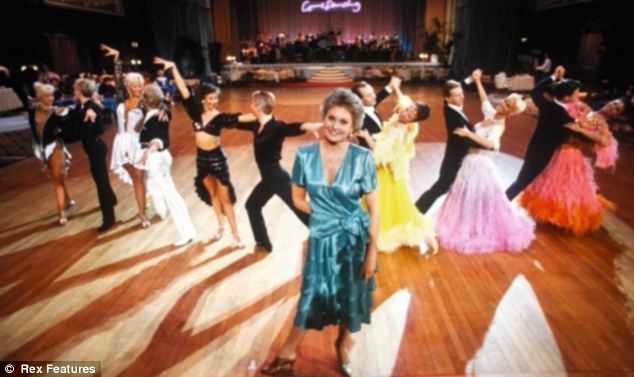
At the time (1997), dancing – especially Ballroom dancing – was considered pretty uncool. People’s perception of the dance was mostly derived from Come Dancing – not the glamorous Strictly that we all know today – but its frumpier predecessor where you might see Beryl and Fred from Urmston plodding through their quickstep routine, him in tux and her in hand sewn sequin and ostrich feather dress.
The original Come Dancing c. 1990 – source: Daily Mail
The Ballroom Dancing Society (BDS) was subsidised by the Student’s Union so we members only had to pay £1.50 for a class. Our teacher, Mary, was already at retirement age with 2 dodgy hips and an 80-a-day smoking habit. We used to have a break mid-way through the class so she could nip out for a fag!
Over the years we danced socially, then moved on to competing (we were coached by top talent such as Kylie Jones McAlister, former world ballroom champion, and Vincent Simone & Flavia Cacace off Strictly).
I’m in the middle, holding the mascot
I’m in the yellow and green number
I’m at the top, not falling off a table
Sarah, Nat and Gemma are in this one, I’m holding the camera
The way the Society worked was that we had to elect a committee every year from the student body. You weren’t allowed to hold a position for more than a year so we would just swap roles between president, treasurer, secretary etc! That first year, Vanessa was President, second year Danusia, 3rd year Natalie, 4th year me, then after I graduated, Gemma took charge, then Sarah, then Stuart.
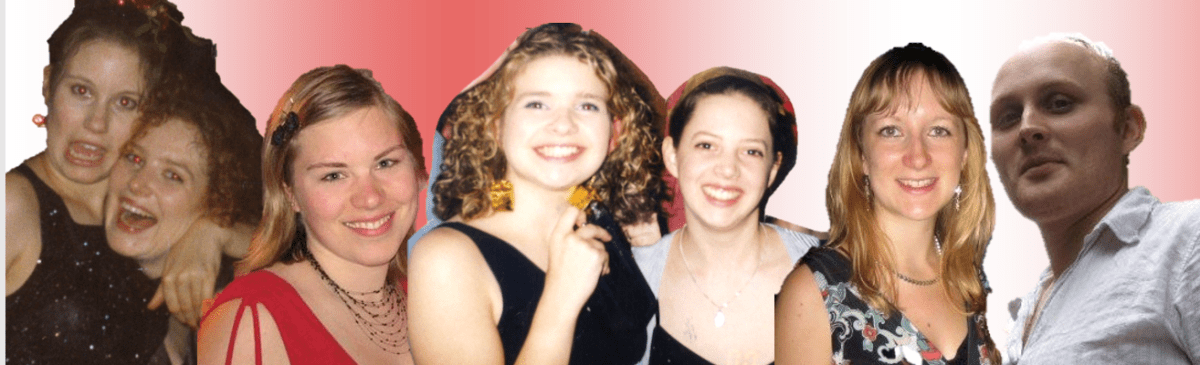
L-R: Me, Vanessa, Danusia, Gemma, Natalie, Sarah, Stuart
We were all good friends but eventually time ticked on and we all lost touch. Every now and then we would drop each other a “hi” or like a facebook post, and we often talked about getting back together… but never did.
Stuart and me, 2003
Gemma and Natalie, 2000
Gemma and me, 2001
Nat, me and Stuart, 2003
Chris, Janet, Ben, Phil, Vincent Gemma, Luke, Jimmy, Flavia 2003
Me and Vanessa, 1997
So when I decided to make it one of my 40 things, I contacted the guys and asked them if they wanted to meet up. Initial responses were good – everyone said they were up for it so I went ahead and sorted a date. It was quite difficult to find a date that everyone could make!
The first date was tentatively agreed, but as it got closer we all kind of forgot and by the time I confirmed it, it was too late. Never mind – we quickly settled on another day in 6 weeks’ time. I booked a bar for drinks and karaoke and we were all set for a lovely night out!
We’d been checking in during the run-up to the reunion to try and pull the group together, however when the night came around, Facebook messenger looked something like this!
I’m here
On way.
Sorry, just moved to another county and can’t make it!
Sorry, Family is visiting unexpectedly and can’t come
Sorry, Stuck at work so not going to get there in time
Sorry, Can’t get a babysitter
No reply
So my “reunion” turned out to be just me and Natalie – my best mate who I see all the time. So not much of a reunion at all!
We didn’t fancy serenading each other so we went out for dinner at Cote instead and had a lovely time!
Where is everyone?
I’d say this one is definitely the closest to a fail I’ve managed so far – I’m counting it as a technical “win” as I did achieve the brief – to arrange a reunion – just nobody turned up.
I will be recontacting people individually to catch up as I still miss the guys, just a shame that a reunion didn’t work! Win some, lose some I guess!
A chance to show my friends how much I appreciate them
When I was writing my list of 40 things, I wanted to set myself some goals around becoming more generous with my time. I wouldn’t say I am particularly selfish – if anyone asked me for something I am always happy to oblige – but I do tend to be quite oblivious to the needs of others until they ask me for help.
A couple of years ago, I was stuck without a car for a while and at the time, all of my friends and colleagues rallied round to help me out. It was really difficult asking people for help but I was incredibly touched by the generosity of those around me. Nobody seemed to mind helping, although I definitely minded asking! In fact, often my friends had to suggest, offer or even insist on helping me before I would think to ask!
Words can’t describe how relieved I was when I finally got back on the road and didn’t have to burden others any more.
I had to ask for many, many lifts
I concluded that I would need to be more observant to spot opportunities to help my friends, and so I set myself the goal of doing 40 favours for friends. I started out quite well – after declaring my intentions some friends came forward and asked me for a few favours which I was happy to help with.
I lent out my parking permit to a colleague, lent my dining table and chairs to a friend for a dinner party, helped a friend create a costume for her daughter’s school play, and made a cake for her to auction off at her kid’s school fete.
Cake for Mandy’s Christmas fete auction
My friend Dave managed to call in a few favours – he was moving abroad and so I helped him pack, housed him for a few days, and helped out with a few other bits such as cleaning the house ready for his new tenants, and maintaining his garden.
Nat, Chris and I show off our guns after we helped Dave move
It was around then that the opportunities dried up. Apart from the odd lift here and there, I found it really hard to actually do anything for anyone!
We Brits are a proud bunch, and it is a strange phenomenon that people simply do not want to trouble others by asking for help. In fact, even when you have someone jumping up and down, begging to help, we go, “No no, it’s OK, I can manage”. I don’t know whether it is that British reserve, not wanting to put anyone out, or if it is because we are fiercely independent and don’t want to be beholden to another person.
In the end, I put out an appeal on Facebook. I asked my friends to help me – by letting me help them. A few people came back with some suggestions. One friend asked me to babysit so she and her husband could go out to celebrate their birthdays. Another friend asked me to help her boyfriend write his CV and job applications. One friend asked me to help with her gardening when she was unable to move following an operation.
Gardening at Pretty’s house
I was delighted to help with all of these things, but for each of them I had to chase the person – after the initial request and agreement, there was a general reluctance to follow through and actually take me up on the offer! I had to keep reminding them that I meant it!
The clincher was when I emphasised that by letting me help them, they were also helping me achieve my goal. It seemed that this was the key – reciprocity – the fact that people didn’t want to inconvenience me or put me at a disadvantage.
Doing the favours for friends was a really interesting exercise. I relished the opportunity to help my friends, and to demonstrate to them how highly I regarded them by just a few little actions.
It also gave me an opportunity to give something back – others have done so much for me, even if I couldn’t directly repay the people involved for their generosity I wanted to pay it forward and spread the love a little.
Finally it gave me a chance to observe a quirk of British nature – the reluctance to accept help, even when offered. I’ve seen it before when doing the random acts of kindness – people simply do not want to put others out.
The lesson from this one is simple. People are ready and willing to help – they actually want to – and by refusing to accept their offer you are not only making things more difficult for yourself, but you are also denying your friends the opportunity to do something that will make them feel happy and content, knowing that they have found a way to demonstrate how much they appreciate your friendship.
If someone wants to help, let them. You will be doing them a favour.
In 2013 I saw a video online of a new zip wire in Snowdonia. I’d not long climbed up the mountain and was excited to see a new way to experience the amazing scenery. I watched the video, filmed on a go pro, and my stomach plummeted as the person went over a ridge and the ground dropped away!
I decided then and there that I wanted to do this, despite my terrible fear of heights I could see instantly that this would be a brilliant experience. I told my friends, and one by one they all had a go, but I never got round to it. When writing my list of 40 things, this was one of the first to be added – it was time to stop putting it off.
I had initially booked to go on my own, but then when chatting with my friend Sandy, she told me that she also wanted to have a go so we decided to go together. Weekends book out really quickly so I took a day off work and we headed up on a weekday. We drove up the night before – I’d booked accommodation at Bangor University in their halls of residence (all the students were away for the summer hols) because it was cheap and cheerful.
On our way!
We had a brilliant road trip with lots of fun – you won’t be surprised to know it involved a lot of singing along to the radio! The drive took about 5 hours but it went so quickly with good company. When we arrived, the accommodation was surprisingly good, and for £30 it was a bargain.
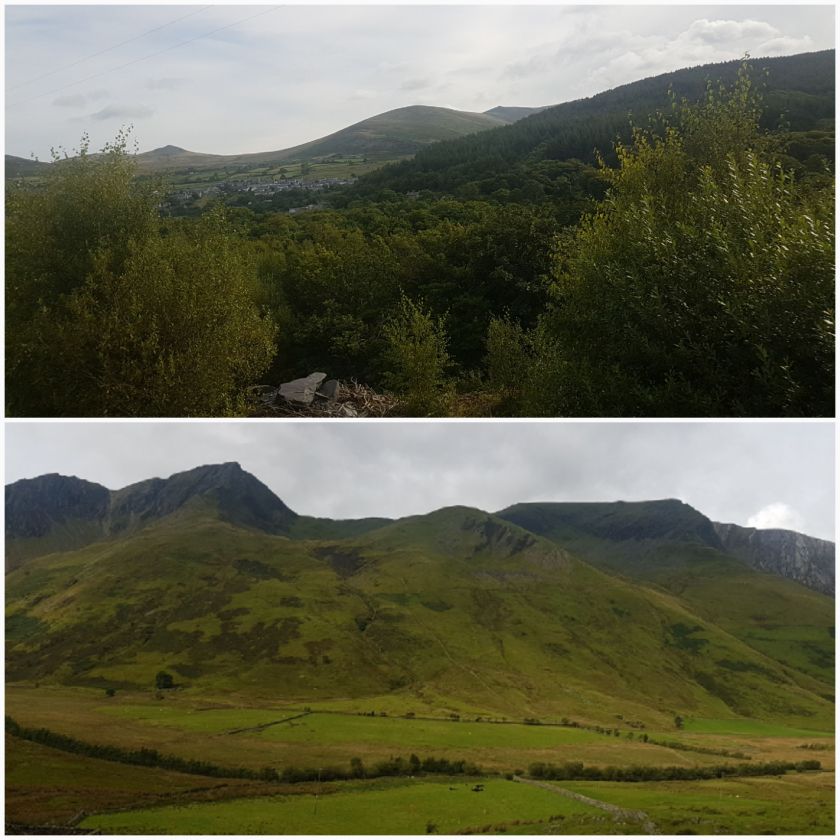
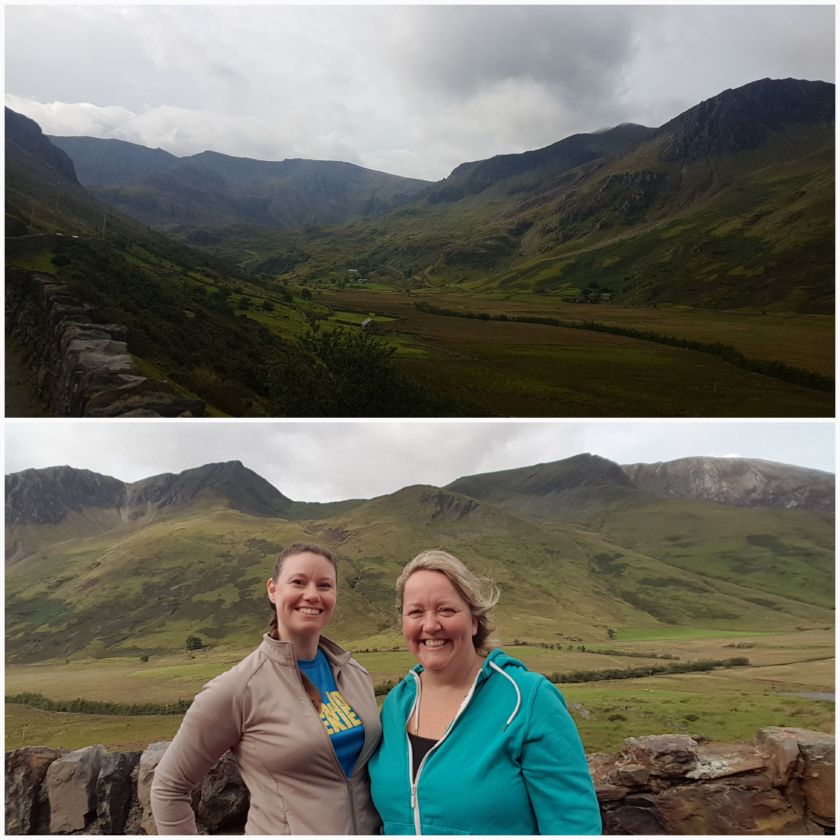
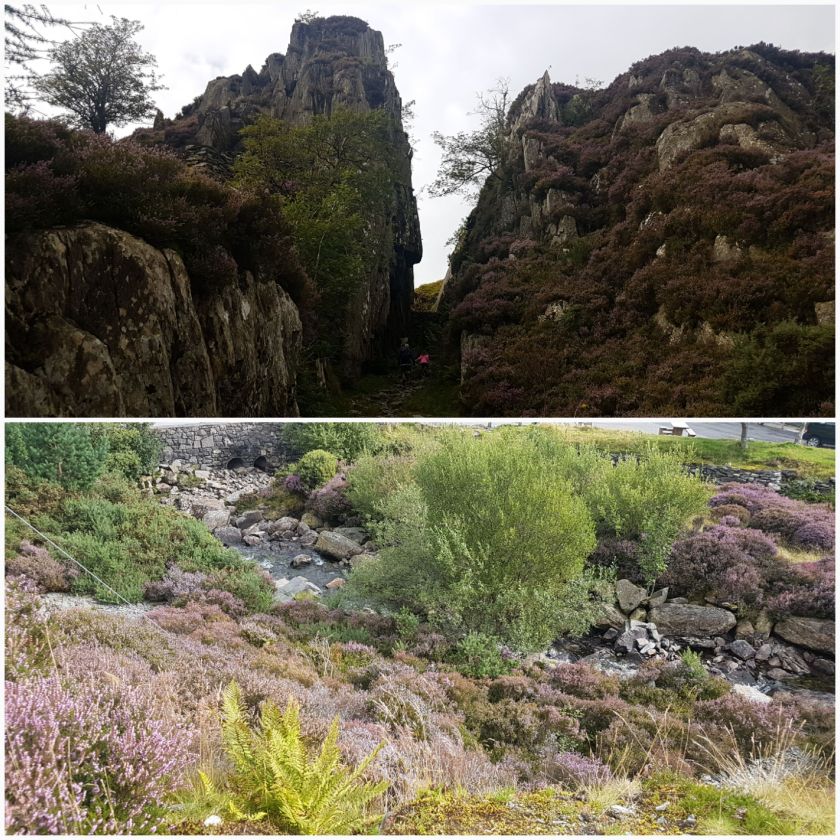
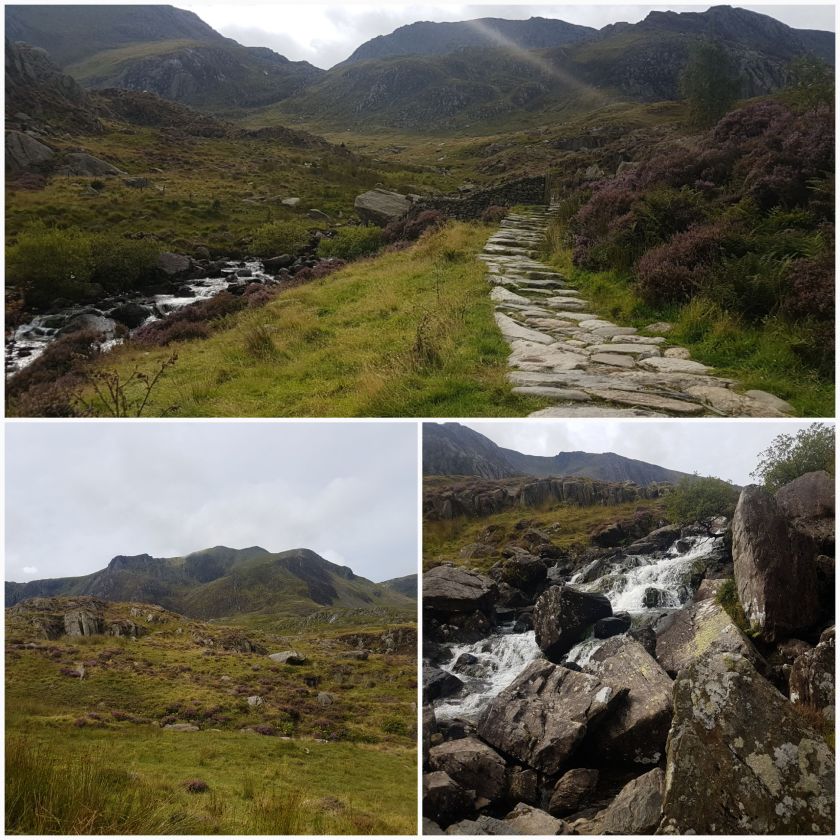
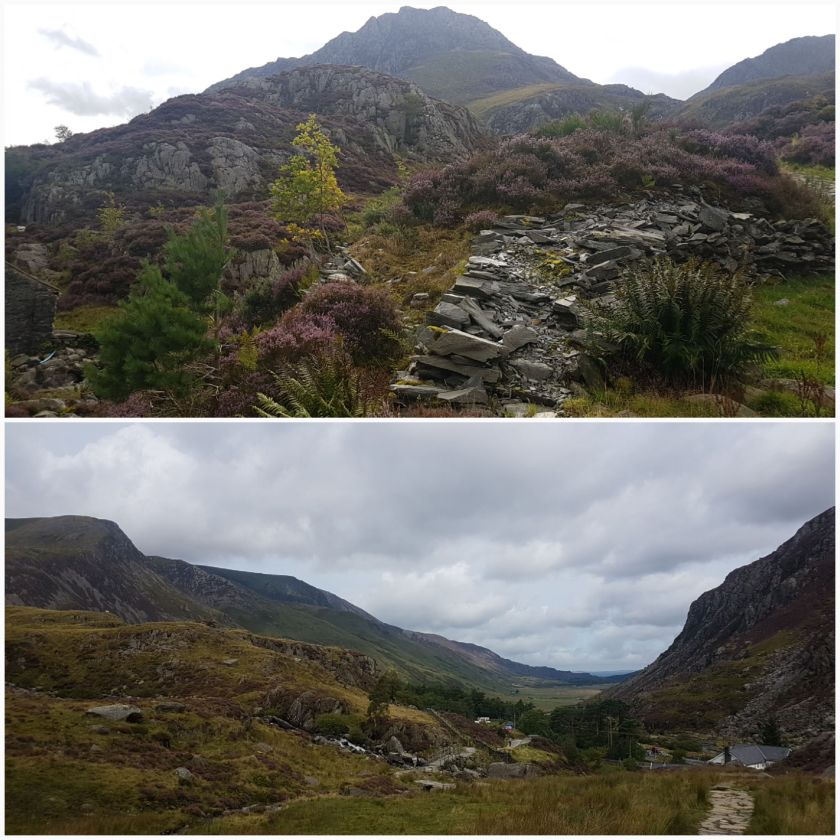
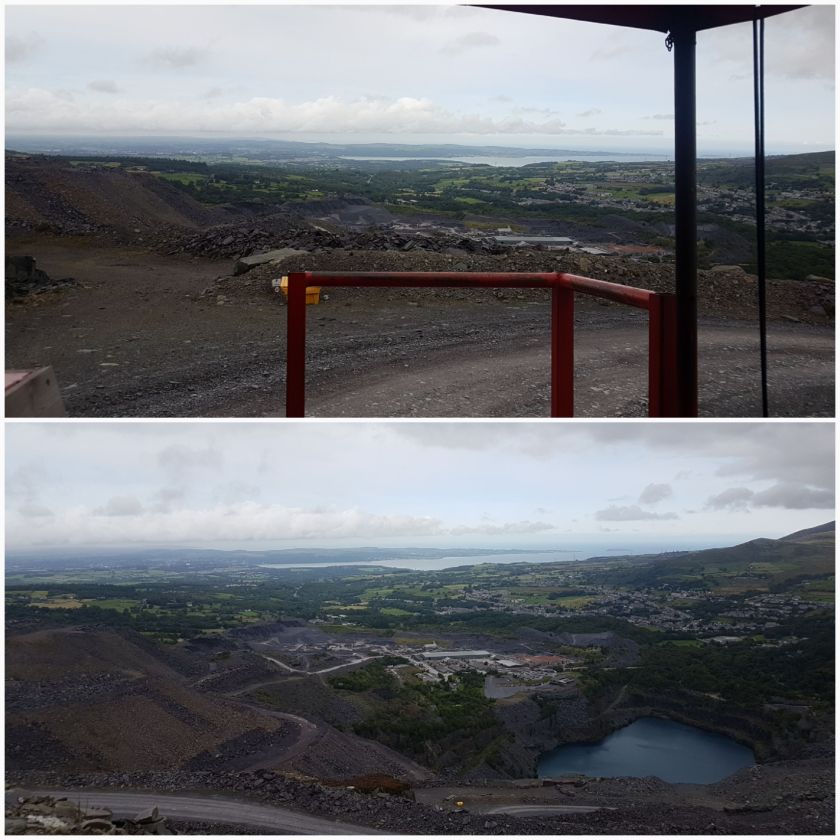
The next day, we headed up to Penrhyn Quarry, the site of the zip wire. We arrived over an hour early so went for a little drive around to admire the Welsh countryside – it was so beautiful!
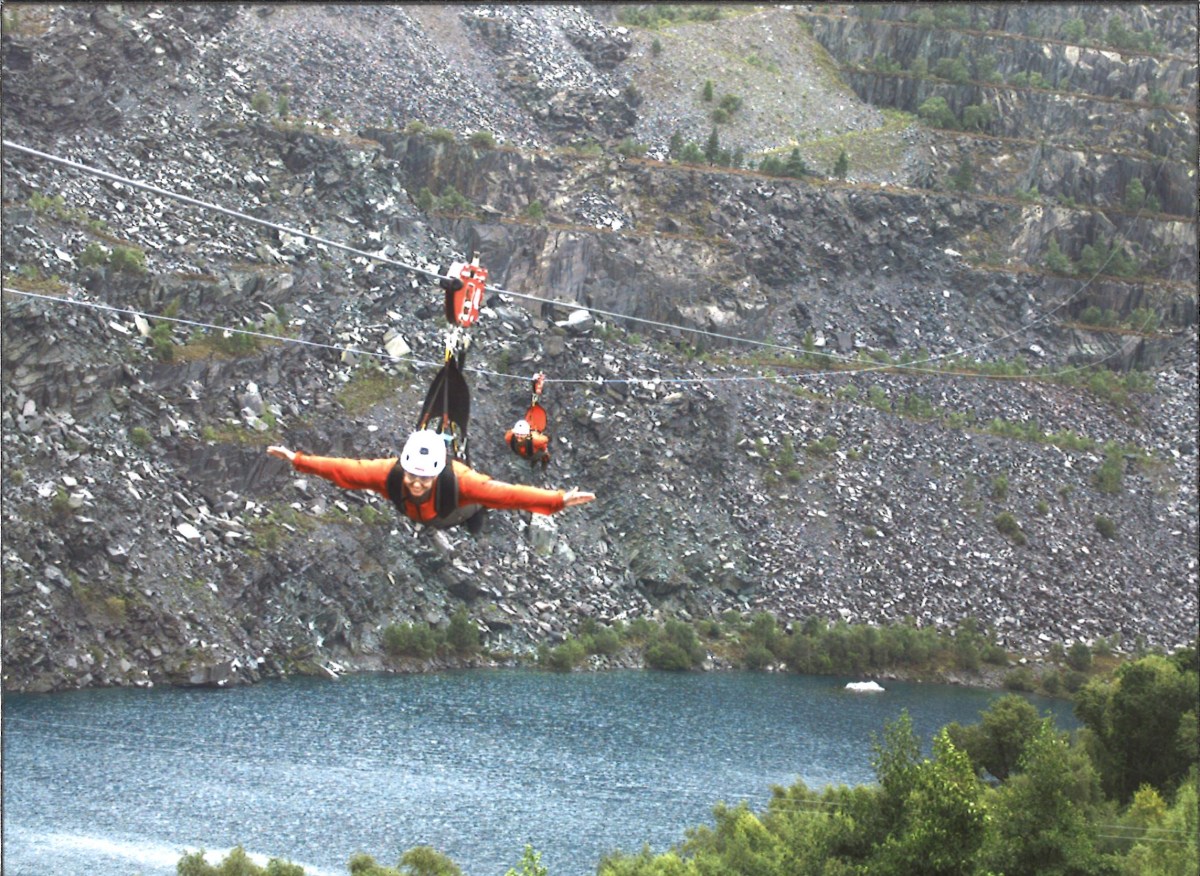
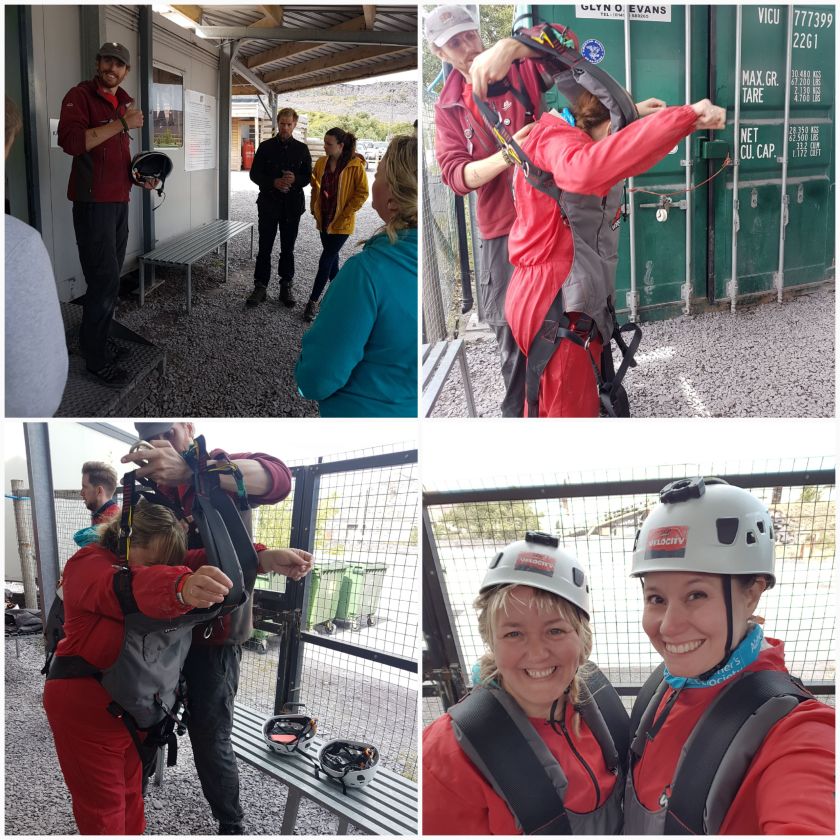
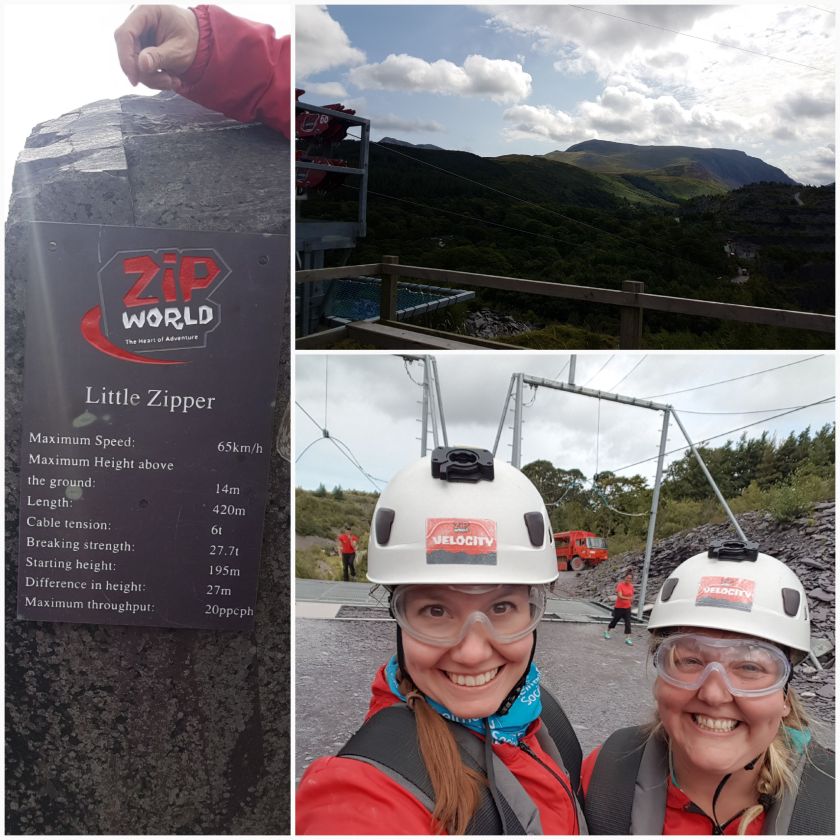
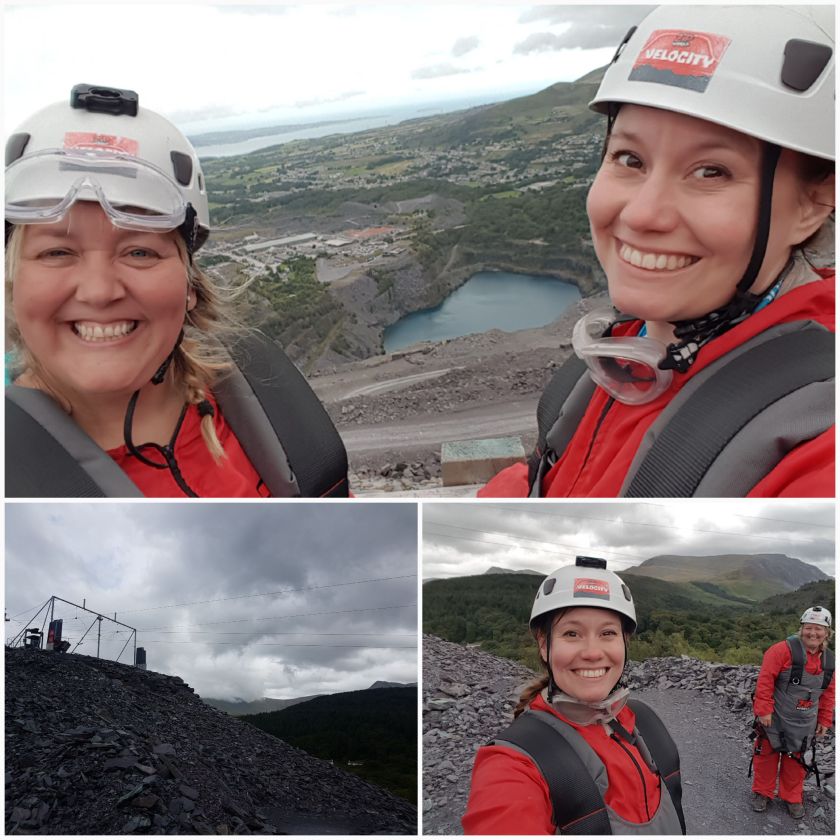
We went back to the quarry to await our allotted time slot, feeling slightly nervous. The time came and we donned our sexy overalls and got into our harnesses. Safety briefing done, we then went to do a little zip wire – 500m – which gave us a little taste of what was to come. The most terrifying part was when you have to do a kind of press-up over a gap in the platform whilst they are strapping you in!
Little zip wire done, we got in a truck to go to the top of the mountain for the big zip wire. The longest in Europe, the zip wire is almost 1600m long and can reach speeds of 118mph – the fastest in the world. At the top, it hit us just how high up were were! On the way up we got chatting to a lad who was absolutely terrified – weirdly by calming him down it really helped us keep our nerves in check!
Sandy and I decided to go first so that we didn’t have the excruciating wait where the terror built; so we immediately nipped to the front and got ourselves strapped in. A quick count down and we are off! It was a weird sensation, you are strapped in so that you are looking down the whole time. The ground dropped away and we zoomed to the finish line. Despite the immense speeds, the scenery is so vast that it doesn’t look like you are going that fast. You can feel it though because the wind is buffeting your face so hard – I almost couldn’t catch my breath!
A couple of minutes later and it was all over. The experience was exhilarating, definitely worth going! The only thing I regret is that I didn’t spend more time in Wales to enjoy the surroundings. It’s a long way to go for such a short experience but if it were part of a holiday in the area it would have been perfect.
I’ve always felt inspired by stories of random acts of kindness. The idea of someone going out of their way to make a stranger’s day a bit brighter always leaves me with a warm feeling. So setting myself a goal to perform 40 random acts of kindness had to make the list.
I like to think that I’m a relatively kind individual but actually it is amazing how difficult it can be sometimes to actively find those opportunities. I set out thinking that this one would be a doddle – less than one act of kindness a week should be easy – however 2 months in and I had managed a measly 2 random acts. Nobody seemed to want my help!
I offered to help someone carry their bags – they said no. I thought I could offer my seat on the train to someone but there were plenty of seats available. I hadn’t found any lost people needing directions, or met a little old lady that needed something off the top shelf, or had an unexpired parking ticket to give someone.
I looked on a couple of websites for ideas and they suggested some pretty unhelpful things like:
“Buy stuff for people” – well that would get expensive fast
“Leave motivational notes for strangers” – maybe not, we are British after all!
“Smile at strangers” – really? Don’t we do that anyway? I do!
I realised I was going to have to work hard at this one. I started taking pains to observe everyone around me, to actively identify opportunities. Slowly but surely, the opportunities started to present themselves. If someone was looking around in a confused manner, I’d ask them if they needed help. I spotted an open gate about to blow into a parked car and secured it. I comforted a lost kid and helped him find his nan. I helped a family whose kid had fallen into nettles to find dock leaves and help calm the stinging until they could get her home.
I took the time to chat to the homeless people on the street, and find out their story. Often they told me that they just wanted advice, or someone to talk to, not just money.
In winter, I bought a guy hat and gloves and some thermal underclothes. I found a charity that was collecting old coats for the homeless and donated all my old ones. I put together a little “hygiene pack” for a girl consisting of toothbrush/toothpaste, cleansing wipes, sanitary products, deodorant and dry shampoo and sneaked it next to her sleeping bag.
An example of the type of sign you might see
I soon found other little ways to show kindness. I stopped a lady in the street to compliment her gorgeous dress. I thanked a man who was working hard to keep our riverside clean and tidy. I mowed my neighbour’s garden when I noticed she was away and the house looked unoccupied.
I bought gluten free goodies for a couple of my friends that are intolerant, as a little treat. I cleared a load of undergrowth from a shared common area in my neighbourhood. I gave a hair bobble to a girl at a dance weekend, when hers broke.
Gluten free brownies… mmm
Not everything cost money, although a few of the random acts did – out of the 40 random acts of kindness, 13 incurred a cost. But not that much, a couple of quid here and there which is negligible to me but can have a big impact on someone else.
There are three incidents in particular that really stood out to me.
1: Help carry someone’s shopping
The first was an old lady who was collecting her shopping from M&S. They have a service where you can leave your groceries to collect later – handy if you want to look around town for a bit. You ring a bell at their back door and they bring the bags out to you. I saw the lady trying to pick up several bags and immediately went over to offer to help. She told me she was going to catch her bus home, so I picked up her bags and walked her to the bus station.
As we walked, she told me that she had recently injured her shoulder falling down the stairs, likely from a mild epileptic seizure. She was completely overwhelmed by a simple offer to carry her bags a couple of hundred yards. She said nobody had ever offered to help before, so she always struggled on by herself. I waited with her for the bus and put the bags inside for her, and sent her on her way with a massive smile on her face.
Cost – £0.00
2: Pay for someone’s coffee
The second was in the queue at Costa. I spotted the lady behind me sorting out the coins in her purse to pay for her coffee, and as I ordered my drink and sandwich, I also told the cashier to pay for her drink too.
The lady was completely taken aback. She tried to give me the cash but I explained it was my treat, and she found it quite difficult to fathom that a complete stranger would want to buy her coffee! She apologised that she was about to catch a bus so couldn’t stay, but I assured her it was a simple treat. Slightly stunned, she took her coffee and left in a daze.
The cashier was delighted. She was so touched by the gesture that she tried to give me a free Millionaire’s Shortbread to thank me for my act of kindness! I then proceeded to give this to another customer who was sat feeding her baby in the corner.
As I left, I watched this ripple of happiness spread throughout the coffee shop. The cashier was telling all the customers what she had seen. Other customers were joining in. The lady I gave the shortbread to started talking to another customer, showing them her unexpected treat.
Suddenly everyone was smiling and chatting even though they were complete strangers!
Cost – £2.00
3: Help someone who is short of cash at the till
The third was on a road trip to Snowdonia with a friend. We stopped for some food and in the queue for Burger King, the chap next to us realised that he was about 30p short for his chilli cheese bites. He was getting quite flustered as it was a long way back to the car where his wallet was, and he didn’t quite have enough change in his pocket. They only cost about £2.20 so I reached over and tapped my card on the contactless screen for him.
The chap was completely blown away! He tried to give me the cash but I told him it was a treat. He told us how he was taking his son on a trip, and how they don’t get to spend much time together, and just kept repeating how nobody had ever offered to help him like this before. I wished him and his son a good journey and went to eat my dinner.
On our way to the table, my friend Sandy picked up a handful of napkins and we joked that we always pick up loads of tissues and never use them. 5 minutes later, another customer who had got sauce all over his hands and face came to ask us if we knew where the tissues were. Sandy gave him the big wodge of napkins, and I swear he was as overwhelmed as the first guy!
Just as we were about to leave, the first guy came back, waving a £5 note and again trying to pay us back. He was so grateful as we waved the money away, and nonplussed how strangers were happy to spot him a couple of quid. A bit later, the napkin guy came and again spent ages thanking us and telling us how generous we were!
Cost: £2.20 (me) and £0.00 (Sandy)
Honestly, it felt a little bit like that scene in Coming to America – you know, where people are falling over themselves to thank Prince Akeem – but this was over £2 and some tissues!
It just goes to show that the tiniest gesture, that takes little effort or regard, can actually have a huge impact on the recipient.
You don’t even need their thanks – just the knowledge that you have made their lives a little bit better can be a great feeling. I particularly liked the fact that everyone I helped opened up a little and shared some of their story with me. Especially in the South of England, people can appear distant or cold – shut off from the rest of the world. By offering something of yourself, it is surprising how much you get back in return.
I would really advise that you give it a go. It is addictive, the feeling you get when you do something nice for someone.
Walking in the footsteps of Madge, Joey, Grizel and Robin
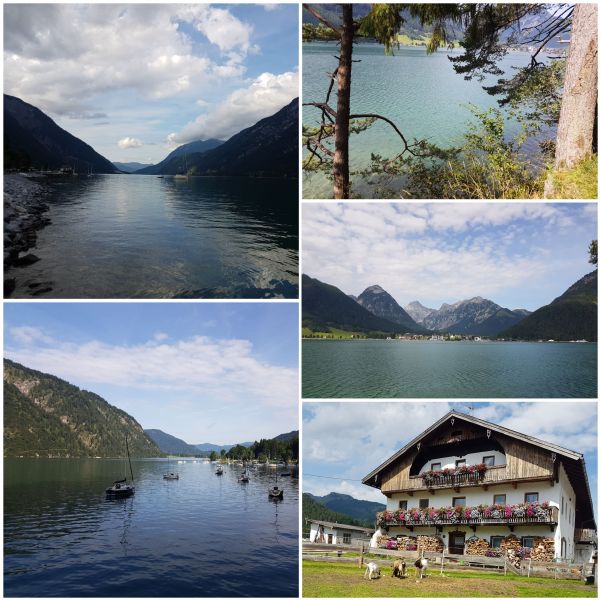
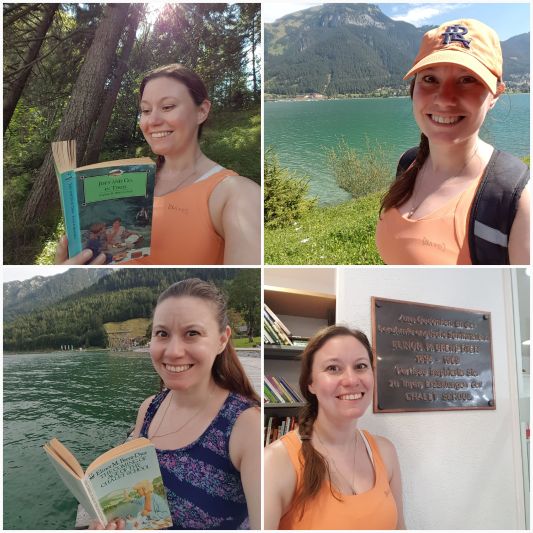
In 1924, a school teacher by the name of Elinor M Brent-Dyer visited a little town in the Austrian Tirol on holiday. She fell in love with the town, on the shores of a beautiful blue lake, surrounded by mountains. She was inspired to write a story about two sisters who moved out there to set up their own boarding school, and the Chalet School was born.
The original book that started it all
45 years later and EBD (as fans like to call her) had written 59 books (later split into 62 separate titles), and had amassed a world-wide following. The stories were written in real time and looking back, it is fascinating to see the way attitudes changed and evolved. When war broke out, the school had to leave Austria, but in a xenophobic nation in the throes of a World War, EBD’s books focused on tolerance and inclusion – encouraging readers to separate the nationality from the politics, and reminding then that not all Germans were Nazis or joined the armed forces by choice – very advanced thinking for the time!
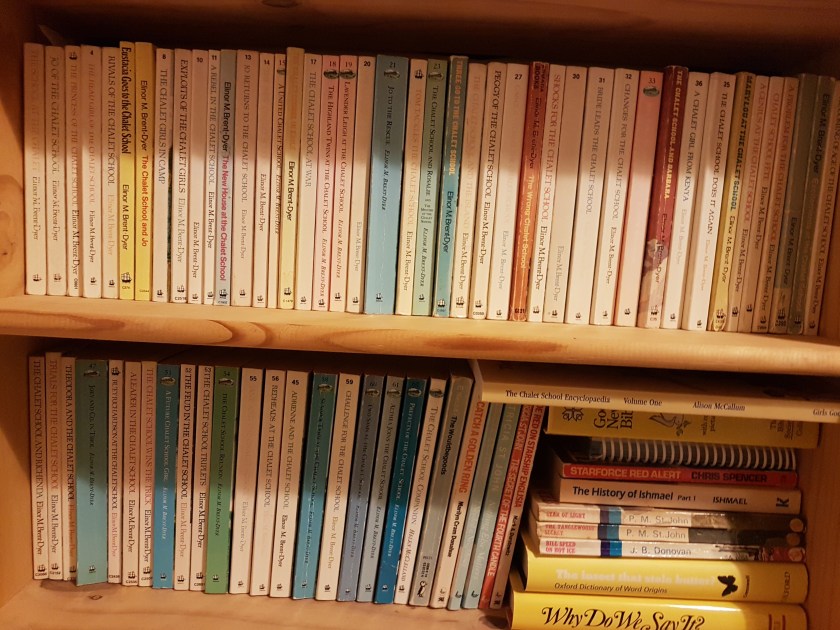
My love of the Chalet School began in 1988, when I was given two books by an old lady to keep me occupied during the boring sermons in church. They were typical girl’s boarding school type stories, about English girls that attended a school in the Alps. I devoured the stories and began looking for more books about the Chalet School. I collected all my pocket money and bought as many as I could from WH Smith, until they stopped being published. I scoured second hand book stalls on the market, charity shops and car boot sales looking to complete my collection.
Sadly the books went out of print some years ago and, aside from the odd title printed by fans, it was increasingly difficult to find the last few. Luckily my friends and family all chipped in with the final few in the last couple of years (thanks Phil!).
The full collection
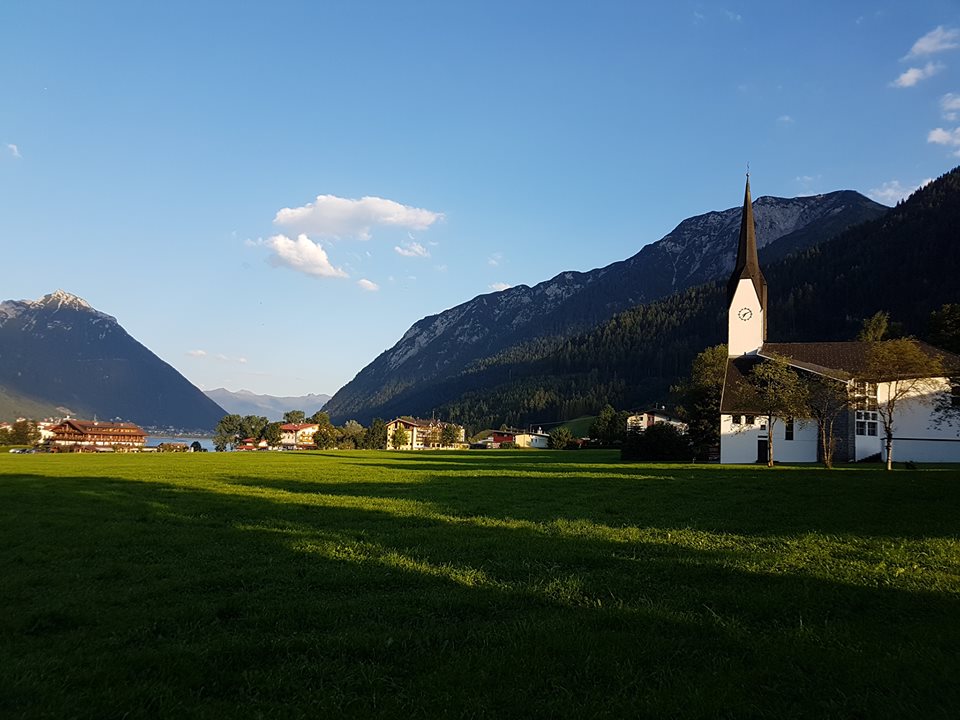
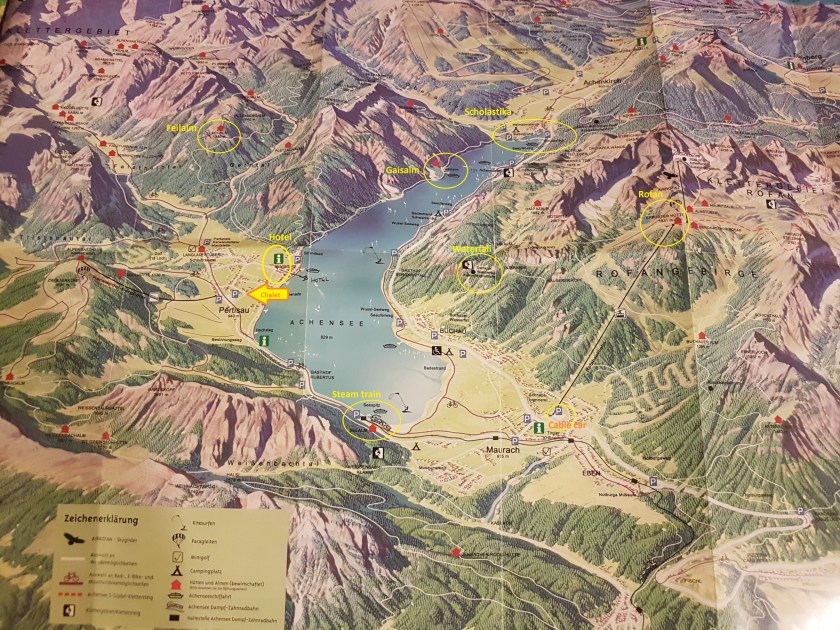
The first 16 books in the series are based in Austria, in a fictional village called Briesau. However, fans have since realised that this is based on a real place – Pertisau – and every village, landmark, mountain and expedition can be found and experienced in real life. Since the age of 18 I have planned to visit this place and see for myself the places that I experienced so many times in my childhood imagination.
I attempted to go in 1997 when backpacking around Europe, but was bitterly disappointed when I ran out of time and money around Innsbruck and had to turn back. Therefore when writing my list of 40 things, this was one of the first things to be added!
Originally planning to go with a friend, she couldn’t make it in the end so I booked on my own to go on a 4-day break via a travel company called Inghams.
I flew out of Heathrow, which was a little daunting as I’d never flown alone before, so needed to work out where to go and what to do. I asked staff for help and it went smoothly so that was one relief! I was greeted at Innsbruck by my travel company rep, who had a coach to take us to our hotels. There was only me and one couple, so the coach was practically empty!
Top: Innsbruck airport; Bottom: Arriving at Pertisau
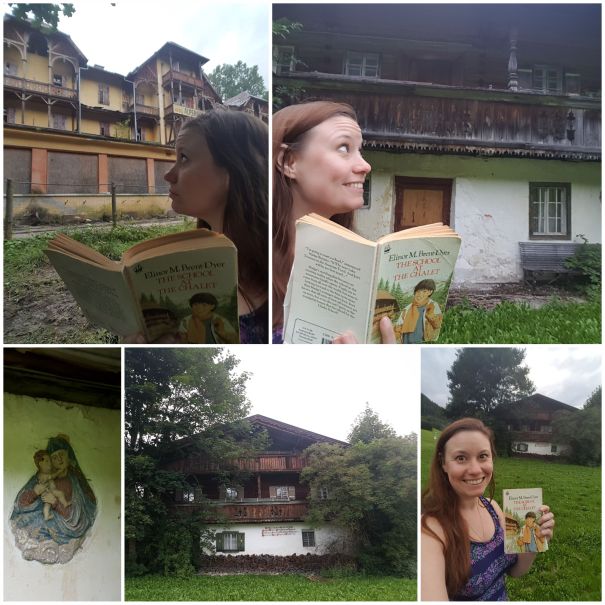
Upon arrival, I explored my surroundings. I’d been doing some research and found a couple of blogs that discussed the location of the Chalet. Some seemed to think it was this old hotel (Alpenhof) but whilst this may have been where EBD stayed in the 1920’s, it did not match the descriptions of the Chalet in the books at all!
Two fans discussed this and suggested another building may be the Chalet. I visited it, and everything matched, from the balconies, to the orientation of the windows, to the carving of the Virgin Mary which is referenced in the books!
The search for the chalet. (Top left is the Alpenhof – definitely not it!)
The next day, I went on a walk around the lake. The village of Scholastika is referenced many times in the books and is the namesake of the rival school across the lake that was the cause of many adventures! I walked past Seespitz, then the village of Buchau, past Seehof and all the way round to the village – a 10 mile hike.
Distances and descriptions were exactly as EBD had outlined in the books. In the village, chalets were gaily decorated, with frescoed walls, flowers along the balconies and goats and chickens in every garden.
Walk to Scholastika
After a gourmet lunch at a little restaurant I found off the beaten path, I caught the bus back to Buchau and walked to a mountain called the Rofan, which fans have identified as the Sonnalpe, home of the main characters and site of some of their biggest adventures including their infamous escape from the Nazi’s in The Chalet School in Exile.
I saw the path that the girls would have taken, as steep as EBD described, but simply did not have time to climb it so sailed up in the cable car instead – not bad for someone with a horrendous fear of heights! At the top of the Rofan, views were amazing and I could definitely see why the girls loved coming up here to stay!
At the top of the Rofan (aka Sonnalpe)
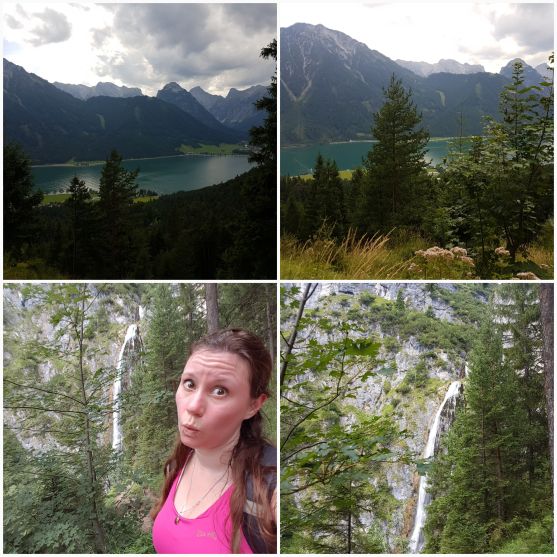
After a little look around, I got the cable car back down because I’d heard of a nearby waterfall that I thought would be worth a look. It turned out to be a really steep path and I was puffing like a steam engine all the way up! Some locals stopped for a chat and asked me where I was going – their reaction when I said the waterfall was “that is really high” and “good luck”!
I got to the waterfall after about an hour and it was really impressive so I am glad I made the effort, and again had a wonderful view of the lake and mountains. On the way back down it was fairly deserted so I entertained myself by singing at the top of my voice, much to the amusement of some other hikers I encountered when rounding a corner!
Climb to Dalfazer Wasserfall, a bit out of puff
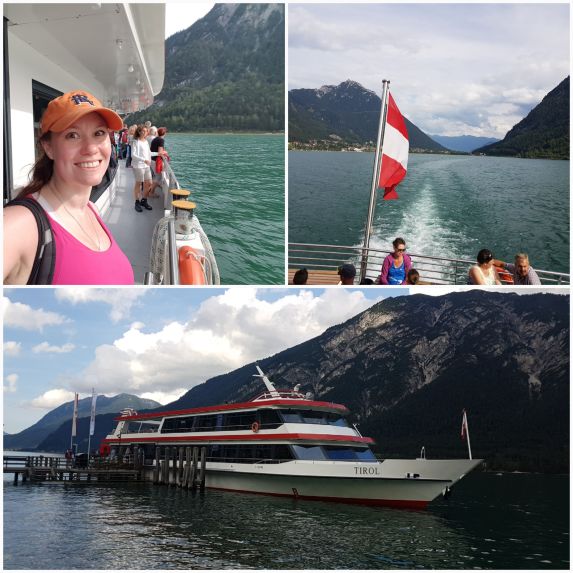
I finally caught the ferry back to my hotel for dinner, rounding off the day by experiencing the same journey that the Chalet girls took on their very first day at Briesau.
Ferry fun
The next day I decided to go to Seespitz and ride the steam train that is still running after all these years. EBD describes the journey in great detail in her books and so I felt like I was one of the Chalet girls, the journey was identical even after 90 years! There’s a great video of the experience by another blogger here if you want to see it for yourself.
After riding the train both ways I then popped to the Fürstenhaus for lunch – the real life Kronprinz Karl which features heavily in the books.
Steam train and Fürstenhaus (aka Kronprinz Karl)
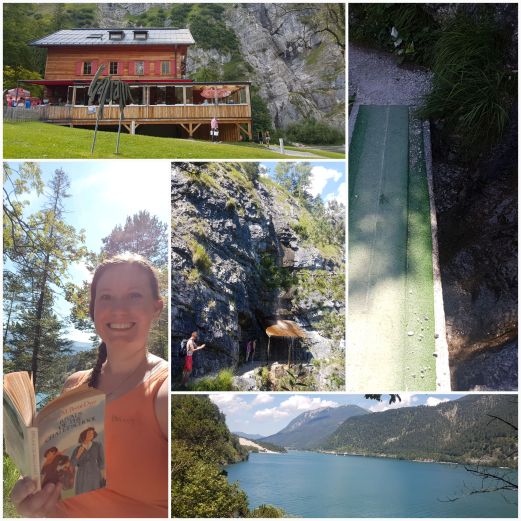
After lunch, I walked along the opposite side of the lake to the previous day’s journey, to see the Dripping Rock and Gaisalm. This was a key feature of a couple of the stories, including a harrowing adventure in Rivals of the Chalet School where the girls were trapped after a bit of the path collapsed into the lake, forcing them to climb over a mountain to get home.
The walk was beautiful but there were some scary bits where the path was a bit dodgy, although they had attached metal cables to the rock face to hang onto. There were even some gaps in the path which had been bridged, where the path had broken away just like in the story!
Walk to Gaisalm via Dripping Rock
At Gaisalm there seemed to be some sort of radio roadshow going on and it was very busy so I immediately got the ferry back to Pertisau, ready for my final expedition. I wanted to climb one more mountain – the Feilalm which in the books is called the Mondscheinspitze.
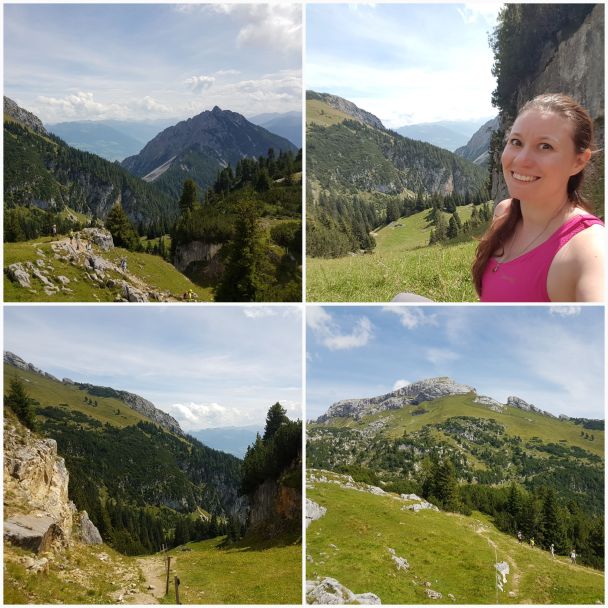
This walk was apparently so easy even the “babies” (6-8 year olds) could manage it and features in the early books. The walk itself was very steep and strewn with rocks and roots, so was actually quite hard going. It seemed to go on forever and with a thunderstorm brewing I was soon rather damp with perspiration! I had a bottle of water but also stopped to drink directly from a mountain spring!
Climb Every Mountain
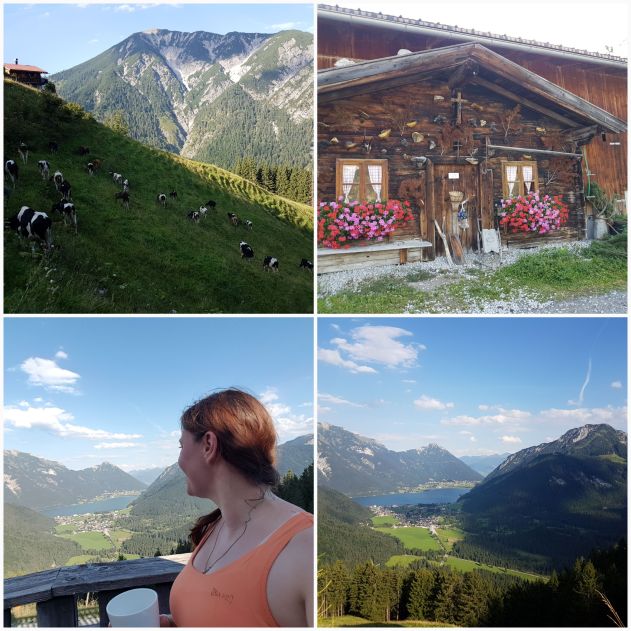
It was totally worth the effort though – the view from the top was absolutely incredible. I stopped to admire the cows grazing on the Alm and bought fresh milk from the Gasthaus – truly feeling like a Chalet girl. Finally I made my way back down just in time for dinner and to get ready for my homeward journey.
Milk at the top! And what a view!
The journey to Pertisau was everything I hoped for and more. Every place I visited was exactly as described, which is pretty amazing considering it was 90 years ago that the books were written! The locals were friendly and I was delighted to exchange the traditional Tirolean greeting “Grüss Gott” just like they did in the books. I genuinely think that it is the most beautiful place I have ever been to, and I echo Joey Maynard when she says that part of her heart will always live here.
I packed a lot into a very short trip, and I will definitely be back. I would be delighted to show any Chalet fans all of the locations that I found. Non-Chaletians would also really enjoy it as it is a gorgeous place, with loads of activities and plenty to see and do.
I’ve been re-reading the books and it adds an extra special element when I can picture the locations as I have seen them in real life!
We are crack bank robbers now. Think Ocean’s 11 but in Guildford. And only 6 of us. And no Hollywood heartthrobs.
Originally invented in Japan, “Escape the room” style challenges were launched in Europe in 2011. Since then, they have increased in popularity and nowadays you can find them anywhere in the UK. They usually have a theme such as zombie attack, prison escape, bank heist, bomb to diffuse, or pirates. There is even now a Harry Potter themed room!
The premise is fairly simple: You are placed in a locked room and given a mission to complete. By solving clues you progress through the room and when solved, this provides you with a key to exit the room. You have a limited time to complete the mission (usually an hour).
Ever since these became popular a couple of years ago, I have been dying to have a go. It reminds me a bit of old TV shows like the Krypton Factor or Crystal Maze – the idea of solving clues and using brain rather than braun really appeals to me!
I looked into different escape rooms, there are so many nowadays – originally I was drawn to a Harry Potter themed one by Enigma Quests – but they were booked out until November so that would not have worked with my October deadline! Further research unearthed a local one called Containment – in Guildford (Merrist Wood).
I pulled together my team – Natalie, Chris, Sharon, Paul, Karen and myself. We all have different skills (logical, abstract, practical, pattern-spotters, wordy, numerical) so I thought it would be a great combo. Paul, Karen and Sharon had done an Escape Room before so knew the format which helped! We could have a team of 4-6 people, but the cost was the same (£120) regardless of team size – so by having more people it kept costs down!
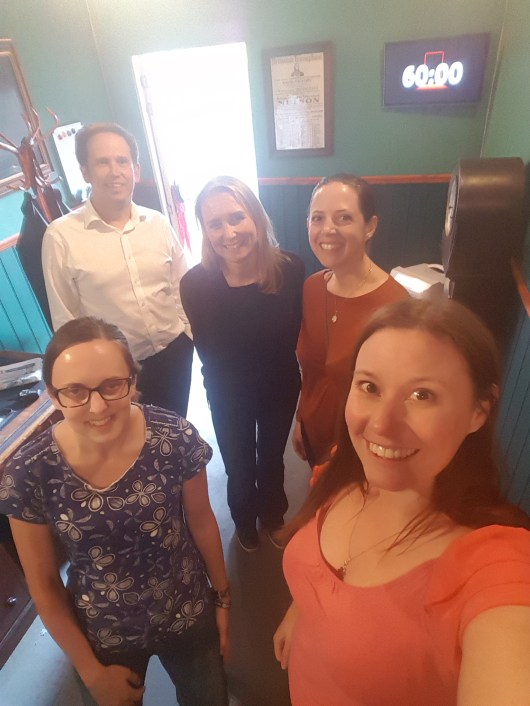
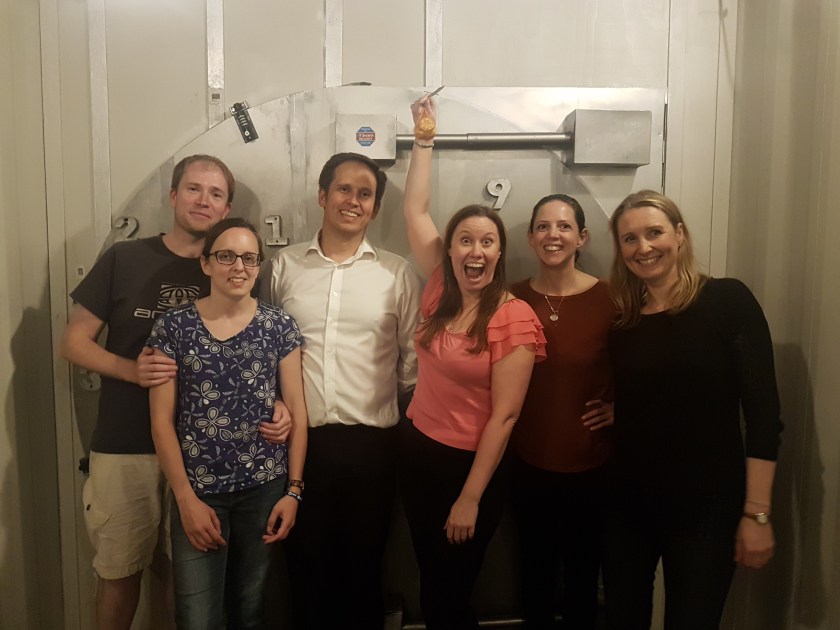
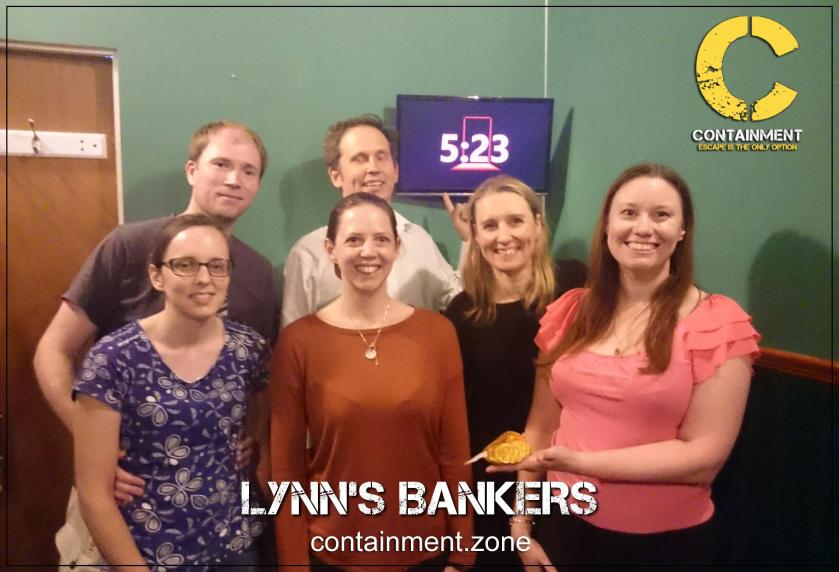
Lynn’s Bankers are ready to go!
Upon arrival, we were greeted by Toby who gave us our briefing. We’d be locked in but he’d be monitoring us on camera so we would never be in danger. We could ask for 5 clues as we got stuck. If we got the general gist of a clue but made a silly mistake he could point us back to the clue rather than us missing it out.
All prepped, we got locked in our room and our hour’s countdown began! We all immediately started poking around to solve our clue, which involved breaking into a bank vault. I won’t give any of the clues away in case you try it yourself, but there was a lot riffling around and poking at stuff. We spotted some key locks and some combination locks, so we figured we’d have to find the codes and keys to progress. We spent ages trying to solve a clue that was not a clue; fortunately the experienced members of the team asked for help before we wasted all of our time on the first stage!
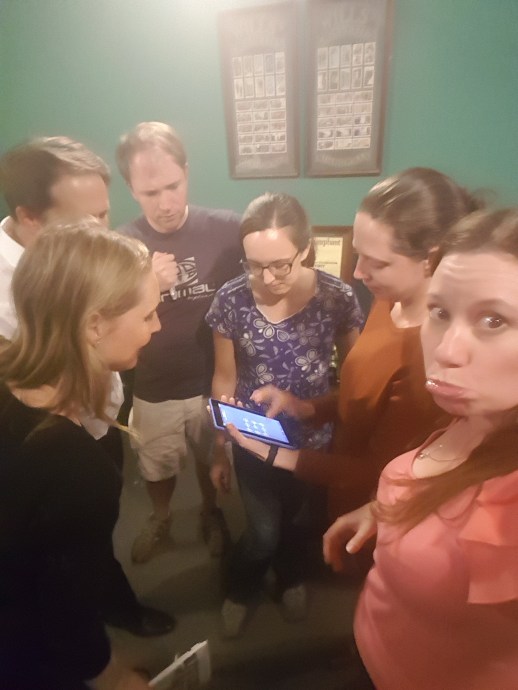
We’re stuck on this clue
The funniest part was when we had two people manhandle a heavy bit of furniture, to which a key was attached, towards a tiny keyhole – for Toby to flash up a message advising us the key detached from its anchor! We felt very silly!
After a while, we got into the swing of it. 20 minutes had passed when we got through the first bit, and we really thought we’d never crack it. But we gathered momentum on the second section and soon we had cracked the vault! We found a safe, opened it to get the key to the door as well as some “treasure”… some gold coins (sadly chocolate… not real).
Cracked the vault!
We finished with over 5 minutes still on the clock, which we were super proud of!
Proof we did it!
All of the team contributed, although I think that I mostly faffed and got in the way of the others! I did spot a couple of things however so I wasn’t completely useless. The team worked best when we paired off and worked on a different section, allowing us to be more efficient. We used all 5 of our clues, strategically asking for help whenever we spent too long on one element, and it was this that gave us the time to complete the challenge.
I really enjoyed myself and I would definitely do it again. The Escape Room was really well organised, and I definitely want to try the other scenario that Containment in Guildford have. Also on the hit list is the Harry Potter one in London, but the waiting list is massive!
You can google local Escape Room style organisations and I would say it’s definitely worth a go, you’ll have fun and it’s great exercise for your brain and problem-solving ability!
There are almost a million people in the UK with severe/profound deafness. If we included age-related hearing loss, this rises to over 11 million! That is one in 6 of the UK population!
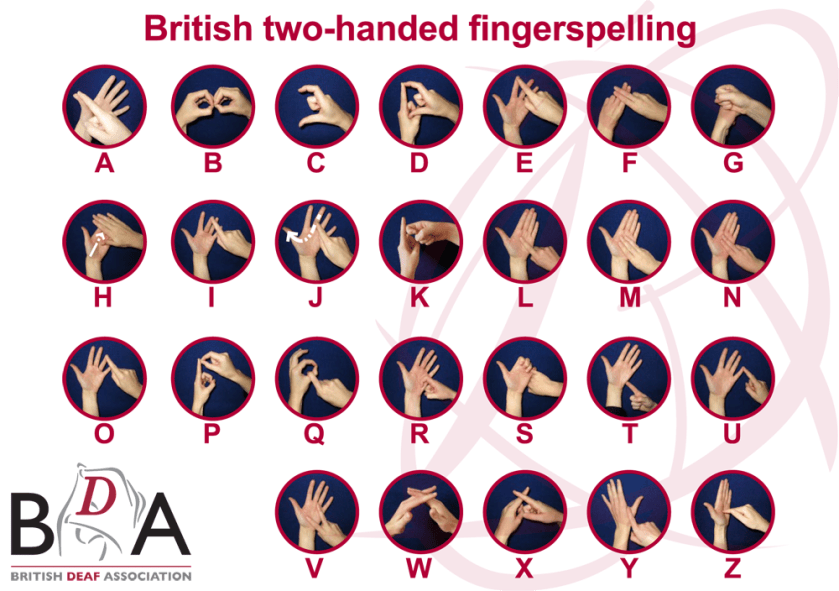
When I was a kid, there was an old lady at my church who was deaf and blind. Her husband used to sit beside her in the services and translate the sermons using a version of the BSL (British Sign Language) alphabet which is drawn onto the other person’s hand. My brother, sister and I all learnt it so that we could communicate with Elsie, and I can still remember it to this day, but never really used the skill again after she passed away.
I have often watched the late night shows with the little translator in the corner, especially in my Student days, and I always fancied giving sign language a go. The Deaf/Blind alphabet is all very well, but I never met anyone else that was deaf/blind and the alphabet, whilst similar, is different enough that it doesn’t quite translate to BSL. So I popped it on the list and started to research courses.
Typical late night telly with sign language
As the skill can be considered a transferable skill I asked my employer if they would be willing to assist in funding the course. I wrote a justification as to how I thought it could enhance our company’s offering and was delighted to learn that the company would make a contribution towards the cost.
I began my research by looking into an Adult Learning evening course. There was one at Surrey Uni for £252, but they were one term in to a year’s course and they felt it would be a big jump to catch up. I then found a private company (Dot Sign Language) who offered a 20 week course in BSL Level 1 for £350 (plus assessment fees). Unfortunately I missed the sign up deadline, and the next term didn’t start until October, so I enquired about private tuition instead.
Amazingly, the Director, Kathleen Grehan, was more than happy to offer one-to-one sessions at a cost of just £30 an hour. She even agreed to meet me at my workplace during my lunchbreak, so that I could fit it into my working day! We agreed a 10 week course, and we would take a view as to whether I would be able to complete a qualification or not, depending on how quickly I picked it up.
When arranging to meet, I discovered that Kathleen is deaf and that we would be communicating by pad/paper or typing onto a laptop; or sign language. I was a little nervous before we met, but luckily Kathleen was absolutely fantastic; very friendly and non-intimidating.
Our learning objectives were:
Understand and communicate basic conversations when meeting Deaf people
Know basic numbers
Know different weather conditions
Know range of transport modes
Communication a range of directions
I spent my first lesson learning greetings, the alphabet, how to offer tea and coffee, basic numbers, and number contexts such as time, money, age, 1st, 2nd, 3rd etc., and questions such as who, what, where, why, how. Kathleen followed up after each session by emailing me with a copy of the notes from our session along with a video clip so that I could practice.
The rest of the 10 sessions went as follows:
Week 2 – We discussed the news, election, political parties, colours, numbers
Week 3 – Days of the week, today, tomorrow etc, and general weather topics such as sun, rain, cloud, hot, cold etc. We then moved on to directions, and different types of transport.
Week 4 – We practised, as I had my first assessment the following week!
Week 5 – First Assessment
Week 6 – Family, background, home, describing people, ages, jobs
Week 7 – Hobbies, dancing, holidays and my 40 things.
Week 8 – Second Assessment
Week 9 – Job role, insurance, directions,
Week 10 – Final Assessment.
The assessments took place by setting up a video camera and then having a conversation around a set topic. Kathleen then sent off the videos for external verification.
A few weeks later, I received confirmation that I had passed! Whilst not the greatest mark, I achieved 60% so I was fairly OK with that – had to remind myself that’s a 2:1 in degree terms!
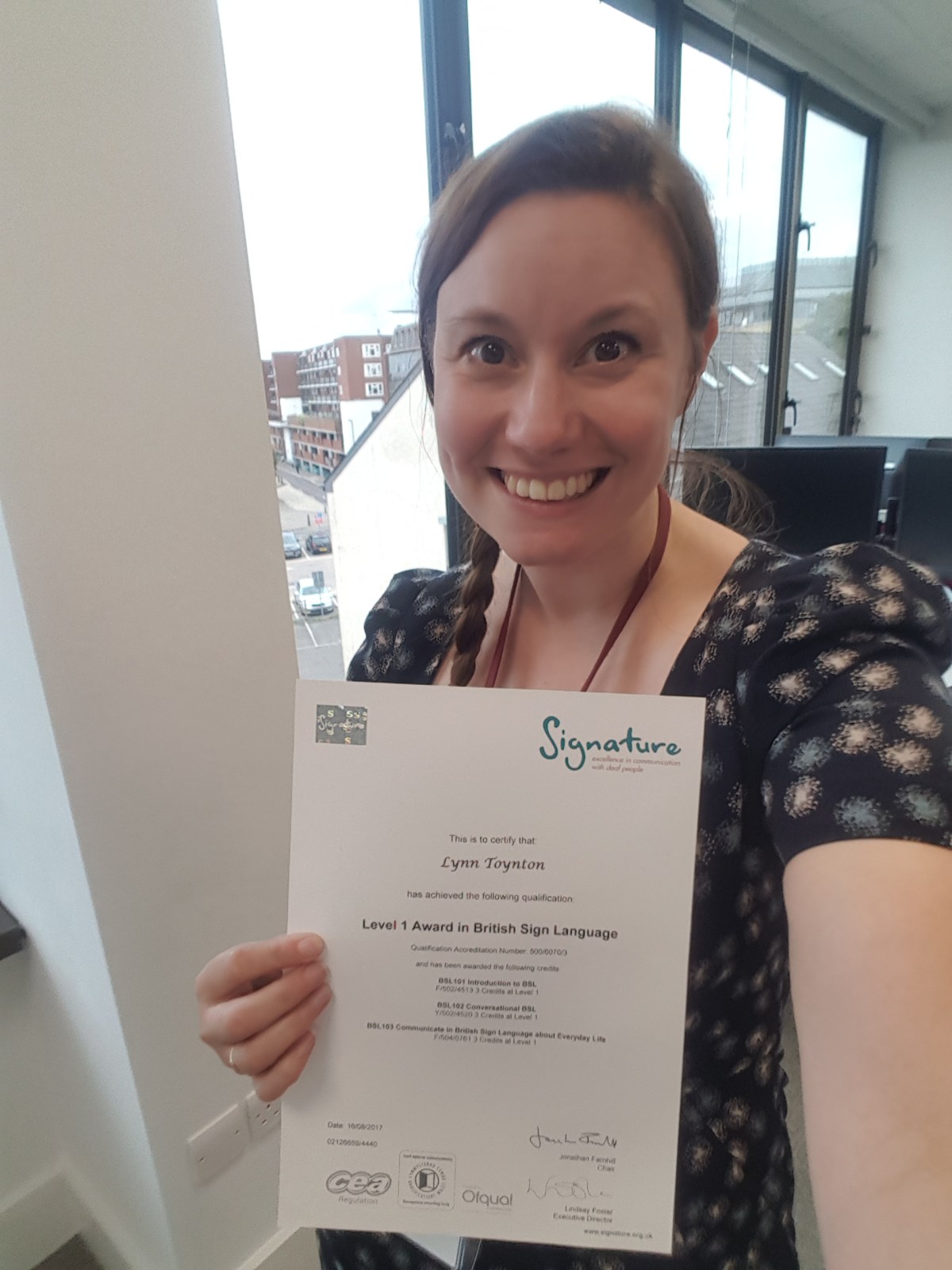
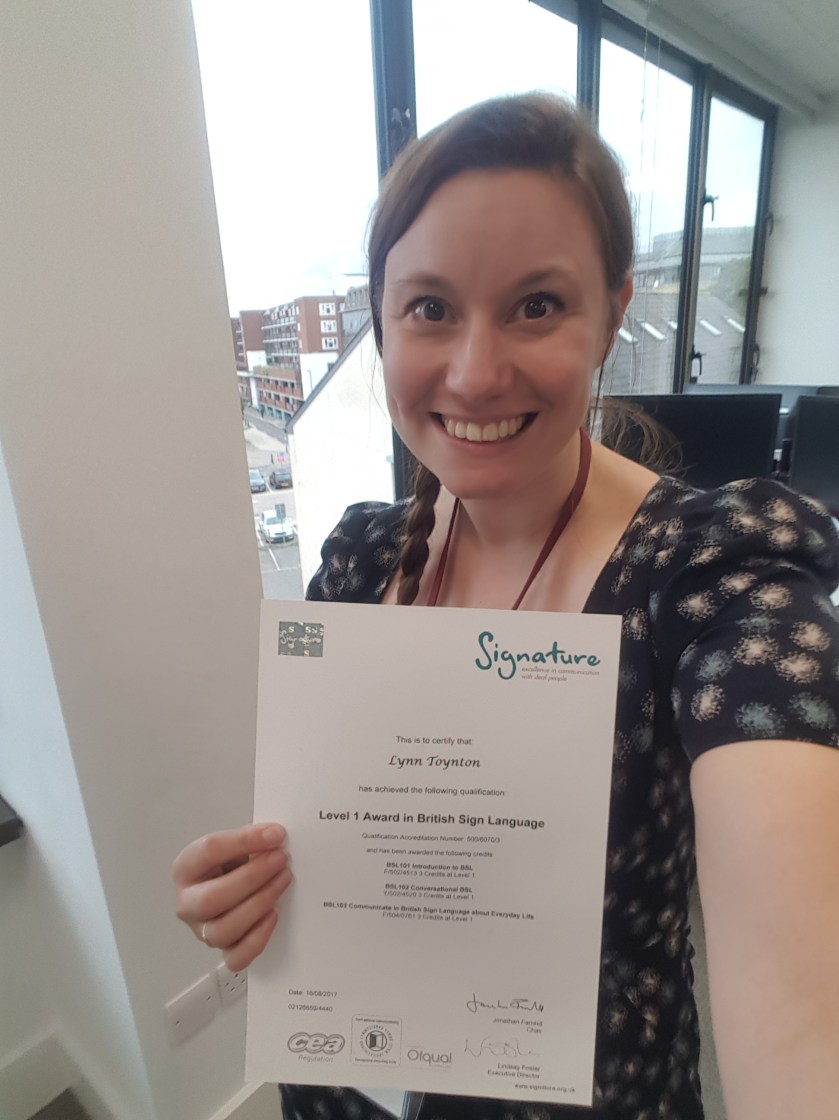
The certificate arrived today and I have promised myself that I will keep practising and I hope to tackle level 2 at some point!
Got my certificate! #proudface
I really enjoyed learning BSL, and it is such a great skill to have. There are so many people who can be isolated from the hearing world and I am keen to do my part in including them. Anyone can learn, and it doesn’t have to be a classroom environment. You could probably get a few of you together and share the cost too!
Since the late 1880’s, it has been recognised that women wanted a place to go where they could socialise, learn new things and support their local communities. In 1915 the UK’s first Women’s Institute was born. Originally its aim was to revitalise rural communities and aid in the production of food during the First World War. Over the years the institute has flourished and developed into the WI as we know it today – providing women with educational opportunities and the chance to build new skills, to take part in a wide variety of activities and to campaign on issues that matter to them and their communities.
Until recently, my personal view of the WI has been limited to the usual stereotypes – old ladies sternly judging each others’ Victoria sponges and home-made jams; over-zealous middle-aged busybodies staunchly singing “Jerusalem” and looking down their noses at anyone that doesn’t join in; and village fetes crammed with home-made knick-knacks in aid of some obscure charity. TV programmes such as Housewife, 49 and Jam & Jerusalem fortified that view. Then came Calendar Girlswhich showed a different, more fun side (although still not for the young!)
Source: ALLSTAR•CINETEXT•BUENA VISTA
At a Vintage fair last year, I met a couple of ladies from the local WI in Guildford. These ladies, whilst still serving the obligatory Victoria Sponge, were young – under 30 – and their descriptions of craft nights, Puds & Fizz evenings, and film/theatre outings sounded like fun! I love craft, sewing, knitting and baking and I love learning new things – so I decided then and there to give it a go.
Of course, fast forward a year and I hadn’t done a thing about it. I had mentally filed it under “I’ll get round to that someday”, which sits somewhere between “Sounds like a great idea” and “I’ve always wanted to try that” – all of which are mottos I am trying to eliminate in my 40th year! So onto the list it went, and I began my research.
What a wide variety of options! You can get involved in all sorts of “Modern” WI groups – especially in London – including a Gothic group making corsets and going on bat hunts; a group of 25-50 years olds who meet up in the pub; hard-hitting campaigners and all sorts of other specialist groups. In the end I plumped for the WI that I had originally met – the Guildford Spike WI.
I signed up!
It meets once a month on a Thursday evening from 7:30 until around 9 ish. The first time I attended was as a guest – I just wanted to see how it all worked. After being warmly welcomed at the door, I was then invited to join the ladies in a room set up for a presentation. I learned that each month a guest comes along and gives a talk on something interesting – this particular month was a lady who had left a successful corporate career in the City to follow her dreams of becoming a photographer.
First WI meeting – Presentation by photographer
It was really interesting and sparked a lot of thought amongst the group about the work/life balance or money & success vs happiness conundrum. The second time I attended (and joined up!) the talk was by a lady who was born in Germany and just escaped the Holocaust. She talked of her experiences growing up in Munich, the escape across Europe, the difficulty in finding education in war-torn London when she spoke no English, and her experiences in later life when revisiting Germany. It was fascinating and I felt privileged to hear this personal account of such an inconceivable experience.
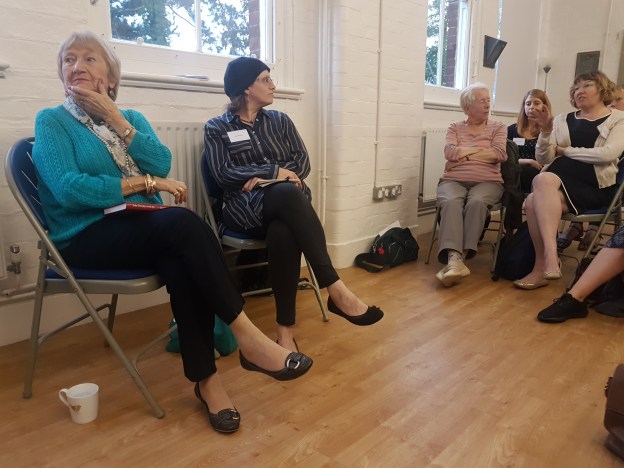
Second WI meeting – Talk from a Holocaust escapeeQ&A session
The talk is followed by a break, which I found to be a bit like a networking event. People milled around with cups of tea/coffee and chatted in small groups. This could be daunting for some, but I was pleased that a few people came over to chat, and I met all sorts – solicitors, bankers, housewives, small business owners, retirees, accountants, and all sorts of other professions. People told their story of how they came to be members – some that had founded the group when they recognised a mutual desire to have a regular space to meet and socialise, others who moved to the area and wanted to make friends, others who wanted to find something new to learn. The group I joined is a varied age group with women from their late 20’s/early 30’s, up to ladies in their 60’s and 70’s.
I also learned about the various clubs and break-away groups within the club. There is a supper club, book club, craft & chatter group, coffee afternoons, puds & fizz group, walking group, gardening group, cinema club, and theatre trips. Days out are organised to spas, stately homes, theatres, restaurants, craft fairs and various other events. I was mightily disappointed to find out that the Craft group meet on a Tuesday which is my dancing night, but it’s only once a month so maybe I can skive off dancing occasionally to go. I signed up to a trip to visit a knitting and stitching exhibition in October and I’m really looking forward to it!
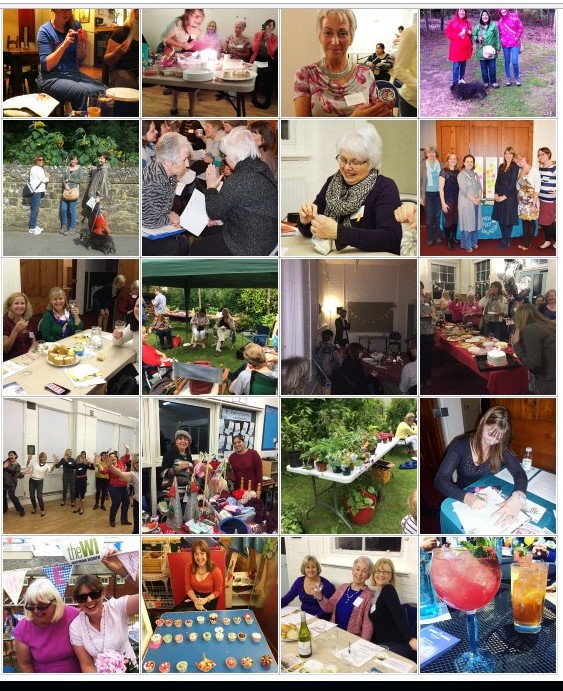
Taken from the Guildford Spike WI gallery – typical group activities
Signing up to the WI doesn’t cost that much – £40 for a year, which works out to about 3 quid a meeting – not including the extra curricular stuff – and it’s a great place to meet like-minded people and learn something new.
I particularly like the monthly talks, which inspire, give me a different perspective, or challenge my world view. All of which are a good thing! The other groups are great, not all are in the evenings though so some I’ll not be able to take part in, but if you don’t have a 9-5 job you have a wealth of options!
I would say it is worth you taking a look around at the social groups in your area. If you’re a woman, why not give your local WI a try? Or another group? It’s amazing how enriching it can be to try something new and open up to new opportunities to learn something new. You might find inspiration for a new hobby, a new career or maybe just gain a slightly different insight into the people around you.

































 40 things...